Most South Philly chimneys were built for coal. The rowhomes from Passyunk to Point Breeze went up between the 1850s and 1920s, brick stacks packed tight against each other along narrow streets, and the flues inside them were sized for a coal stove. Over the decades those same flues were switched to oil and then to gas, and each switch dropped a new appliance into a liner that was never built for it. That history is why we keep finding the two faults specific to this neighborhood: hairline cracks in the original clay tile, and smoke chambers left oversized for the gas units now venting through them. Either one can let combustion gases drift back into a tight party-wall home, so the work has to start with seeing what is actually inside the stack.
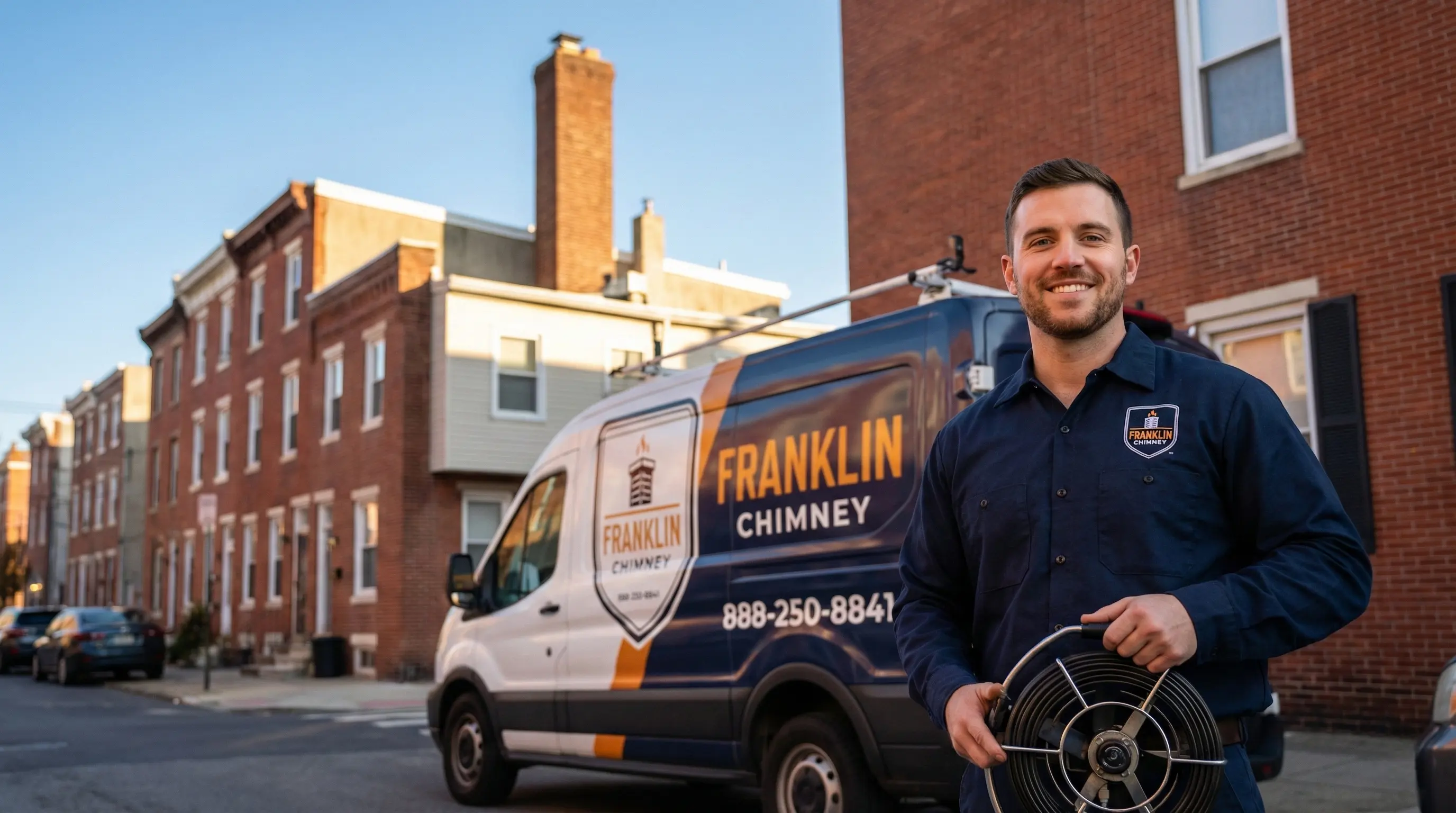
That is the job a sweep does here. We clear out the flue, then run an interior video scan the full length of it to read the liner, the smoke chamber, and the damper for yourself, and we put a written report and a CO draft test in your hands on every visit. Same-day slots open most weeks for the times a detector goes off and you need someone on the roof before sundown.
More than 400 Americans die from unintentional carbon monoxide poisoning every year, according to the CDC's carbon monoxide poisoning information, and more than 100,000 land in the emergency room. A cracked clay liner, a blocked flue, or a back-drafting furnace is one of the most preventable causes. That is why every Franklin Chimney technician in South Philly is CSIA-certified, why the video scan and the CO draft test run together rather than as add-ons, and why we write the report in plain language you can act on instead of filing away.