
Open or sandy mortar joints
What we check: How much of each joint has failed and whether the surrounding brick is sound.
Possible repair: Repoint the affected joints when the masonry can support a focused repair.
From the ground, several masonry problems can look alike. We check the accessible joints, brick, crown, movement, and possible water paths before recommending a scope.
What we check: How much of each joint has failed and whether the surrounding brick is sound.
Possible repair: Repoint the affected joints when the masonry can support a focused repair.
What we check: Which bricks and courses are damaged, and whether adjacent masonry is stable.
Possible repair: Replace damaged brick and repair adjoining joints as the scope requires.
What we check: The extent of damage at the chimney top and where water may enter.
Possible repair: Repair or rebuild the crown or shoulder separately from sound brickwork.
What we check: Movement, stability, and how far the damage extends above the roofline.
Possible repair: Consider a larger rebuild when a smaller repair would leave failed masonry in place.
Rain may enter at mortar joints, the crown, cap, or flashing. A stain alone cannot tell us which part needs work. See our broader chimney repair guide if the source is unclear.
If brick is loose or the chimney appears to lean, keep people clear of the area below and request an assessment. Do not climb onto the roof to inspect it yourself.
Repointing—often called tuckpointing—replaces deteriorated mortar in existing joints. The new mortar must suit the brick and remaining mortar, especially on older chimneys; appearance is only part of the choice. The National Park Service explains why mortar compatibility matters.
The affected sides and height, number of damaged bricks, roof access, materials, crown work, and any permit or historic review can change the scope. Your written estimate should identify the work and total price. For sourced examples of different scopes, read our Philadelphia chimney repair cost guide.
We assess the affected masonry and explain the proposed repair before you decide whether to proceed.
Tell us what you are seeing and share your ZIP. We will confirm the appropriate visit and explain how the written masonry estimate works.

Very happy with the work Franklin did at my house. Came out and gave an estimate and had work done same day. The crew cleaned, capped, pointed three chimneys and added a very stubborn flue connected to the boiler.

Selling my house, and I wanted the chimney inspected They found an issue, and they were able to fix it super fast! Good people!

Franklin Chimney did a wonderful job fixing my chimney and putting in a stainless-steel liner and cap on top of my chimney. They came out quickly for an estimate and did the work in the same week. They were very professional and explained everything they would be doing before the job started. I highly recommend them to anyone looking for honest, reliable, and high-quality service. Thank you for making this such a great experience!

I had an emergency situation that needed immediate help. Franklin chimney came the next morning and estimated the job for me. The estimate was totally in line with the research other companies that I had done and Franklin came out the next day to do the job. I am so relieved to have this major problem in my house corrected. They were great communicators, on time, clean, fair, professional, and did a great job I could not recommend them more.

Very prompt great response time. Very good communication, skilled workforce clean and fast Very professional

I called Franklin Chimney, they came out accessed my situation and worked with me. They also did and amazing job.

It was a great experience working with Madi. The work was done professionally, timely and to my satisfaction.

Thank you for a Great job!

Lady was a great person to work with, they came to assess and completed the liner in my chimney I feel safe now and can turn on my heaters knowing I’m safe.

They arrived early. Completed job timely. Kept area clean.

We needed a level 2 chimney inspection on a quick timeline for our HOA. Franklin Chimney came out in less than 48 hours. Booking was very easy and price was significantly better than competitors. Our technician Madi was very efficient and made sure we had the report we needed.

Tony was honest, excellent, and professional in my home. Strongly recommend

A great experience. The workmanship was exceptional and the pricing was way under other estimates. No overselling and high quality finish work. Count me very happy.

Thanks you for Franklin chimney for a wonderful job, they did the chimney liner professional and clean job

I called Franklin Chimney when I noticed flies coming out of my wood burning stove. Maty was here within an hour. He sent a drone up on my roof and discovered a few holes in the mesh that was easy access for birds or squirrels to enter. He sent 2 guys out the next day. They were friendly, efficient and fast. They removed 4 birds and a squirrel. Put a new cap on chimney and sealed it off with mesh. They were done in about 2 hours. I highly recommend Franklin Chimney....thank you for doing a great job!

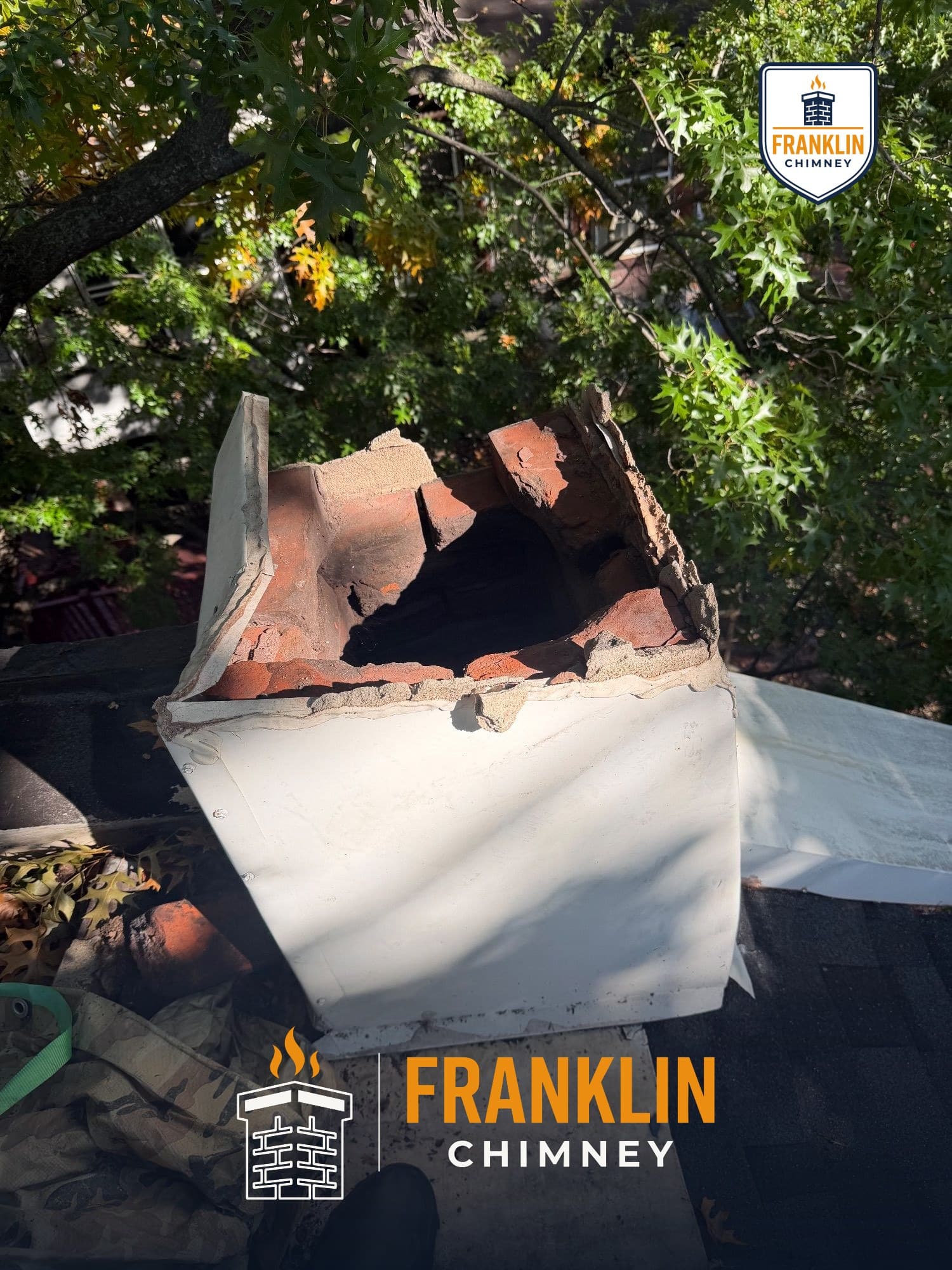
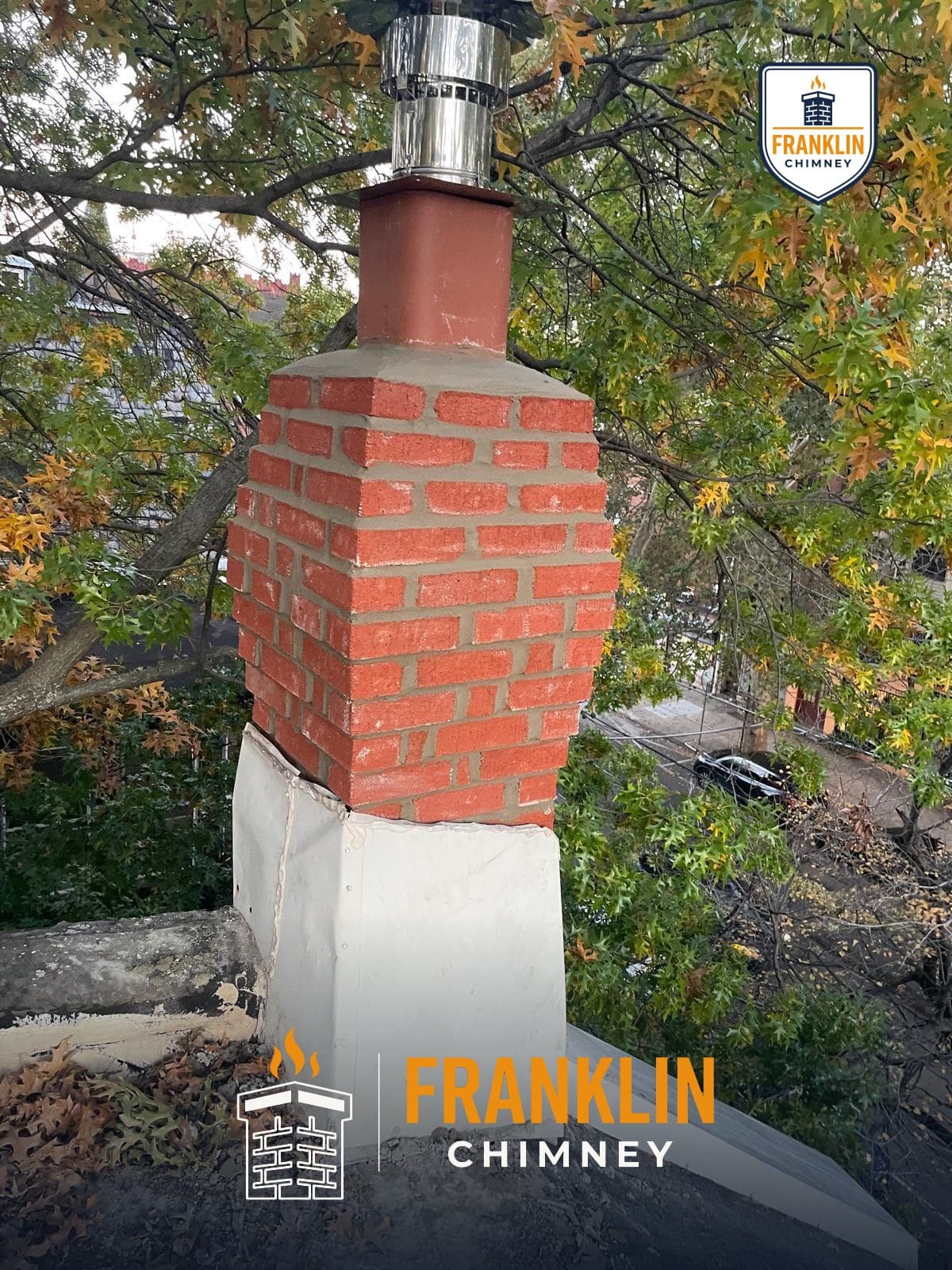
On this Philadelphia project, damaged upper brickwork was rebuilt from the roofline to the crown. The completed work included a rebuilt crown and a replacement cap. The photos show the visible change in the masonry.
A written estimate for your chimney should identify the affected area, proposed materials, work, and total price.
You can review the findings, proposed materials, price, and work-specific terms before approving the work.
Tell us about open joints, loose brick, crown cracks, leaning, or stains. Photos taken from the ground can help.
We check the relevant accessible areas and document the visible condition where useful.
See the recommended repair, proposed materials, price, exclusions, and applicable approval needs.
We carry out the agreed work and explain what was done and any follow-up care.
Financing is available for eligible chimney projects. Review the written estimate first, then ask about current payment options. Financing is subject to provider approval and plan terms.
Ask About FinancingTell us what you have noticed. We can explain the next step and how a written repair estimate works.